Maryland home market
Harford County and nearby Maryland employers
Local employee-benefits, ICHRA, benefits-administration, and Maryland FAMLI guidance anchored by SSGI's long-standing Maryland presence.
Maryland FAMLI filing is open through Nov. 15, 2026.Maryland FAMLI private-plan filing window is open through November 15, 2026.
Get FAMLI-Ready
Mid-Atlantic employee benefits
SSGI Benefits helps employers coordinate employee benefits across Maryland, Pennsylvania, Delaware, Northern Virginia, and Washington DC—without treating every workforce, renewal, or jurisdiction as interchangeable.
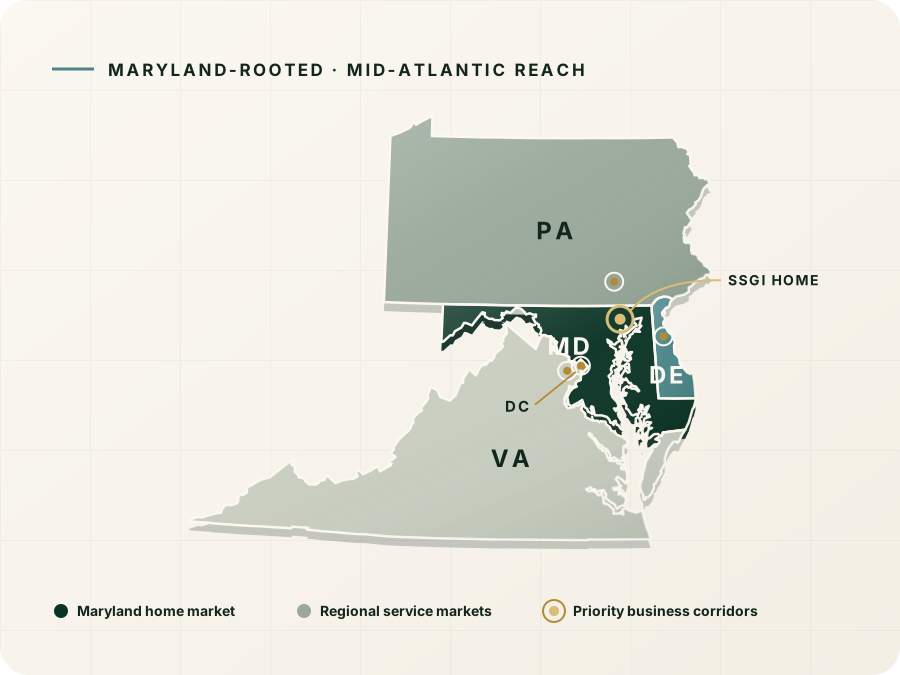
SSGI is one accountable benefits partner across state lines, licensed across the Mid-Atlantic markets featured here. We organize the decision around employee locations, plan networks, renewal economics, leave programs, administration, and the people responsible for implementation.
SSGI serves employers across the Mid-Atlantic, with deep local roots in Harford County and focused guidance for the regional markets where employers are evaluating benefits fit.
Harford County and nearby Maryland employers
Local employee-benefits, ICHRA, benefits-administration, and Maryland FAMLI guidance anchored by SSGI's long-standing Maryland presence.
York, Lancaster, Chester, Philadelphia, and nearby markets
Renewal and plan-design support for employers whose teams may span Pennsylvania, Maryland, Delaware, New Jersey, or remote locations.
New Castle and Kent counties
Employee benefits work that accounts for Delaware's small-employer market and the operational overlap among health, disability, leave, and Delaware Paid Leave.
Arlington, Alexandria, Fairfax, and statewide teams
Group health insurance and employee-benefits planning for Virginia employers, including Northern Virginia organizations with regional or remote workforces.
District employers and covered workers
DC Health Link, renewal, administration, and DC Paid Family Leave coordination for employers operating in the District.
A useful review starts with the employer's actual workforce map and business constraints, then works outward to plan and implementation choices.
Evaluate where employees live and work, whether current networks reach them, and how remote or multi-state hiring changes plan suitability.
Compare the paths that fit the employer rather than assuming a traditional group plan or reimbursement model is automatically best.
Identify where Maryland FAMLI, Delaware Paid Leave, DC Paid Family Leave, disability coverage, and employer leave policies create separate responsibilities or coordination questions.
Build one accountable operating calendar for decisions, employee communication, carrier steps, eligibility changes, billing, and issue routing.
Every regional review can include group medical, dental, vision, life, disability, voluntary benefits, HSA/FSA/HRA arrangements, funding, administration, ICHRA, and applicable leave coordination.
Product availability, eligibility, underwriting, pricing, networks, funding, and recommendations depend on the employer, workforce, jurisdiction, carrier, and current market. SSGI coordinates with carriers, administrators, payroll providers, and the employer's legal and tax advisers; those parties retain their own responsibilities and authoritative records.
The first conversation stays at the business level. Employee medical or claims information is not needed.
Start with business-level facts: employee counts, work locations, renewal date, current program, contribution approach, and the issues leadership wants to solve.
Review funding, plan, network, reimbursement, administration, and leave-coordination options that fit the employer's size and jurisdictions.
Assign decisions, deadlines, employee communication, enrollment, and ongoing service to named people instead of leaving the employer to coordinate vendors alone.
SSGI's Maryland home market includes Harford County plus five additional county and city destinations, each with its own market guidance.
Straight answers about geography, licensing, plan fit, and the limits of general website information.
Explore related regional guidance to compare plan strategy, administration, funding, and state-specific requirements for your employer decision.
About this guidance
Published and maintained by SSGI Benefits, the employee-benefits division of Strategic Sequoia Group Inc. Last reviewed August 24, 2026 using the official sources linked on this page. Carrier availability, eligibility, rates, and recommendations vary by employer and market. This page provides general information and does not constitute legal or tax advice. Meet SSGI leadership · View licensing information.
Educational information only; not legal, tax, accounting, medical, coverage, or compliance advice. Insurance availability, eligibility, pricing, networks, and recommendations depend on the employer, workforce, jurisdiction, carrier, and current market. Confirm current requirements with the relevant regulator or qualified adviser. Use this form for general business information only. Do not include personal health information, claims details, Social Security numbers, member IDs, financial information, or credentials. Plan availability, pricing, and results vary by employer, workforce, carrier, and market.
Tell SSGI where employees work, what decision is approaching, and what is not working today. Start with business-level information only.
